
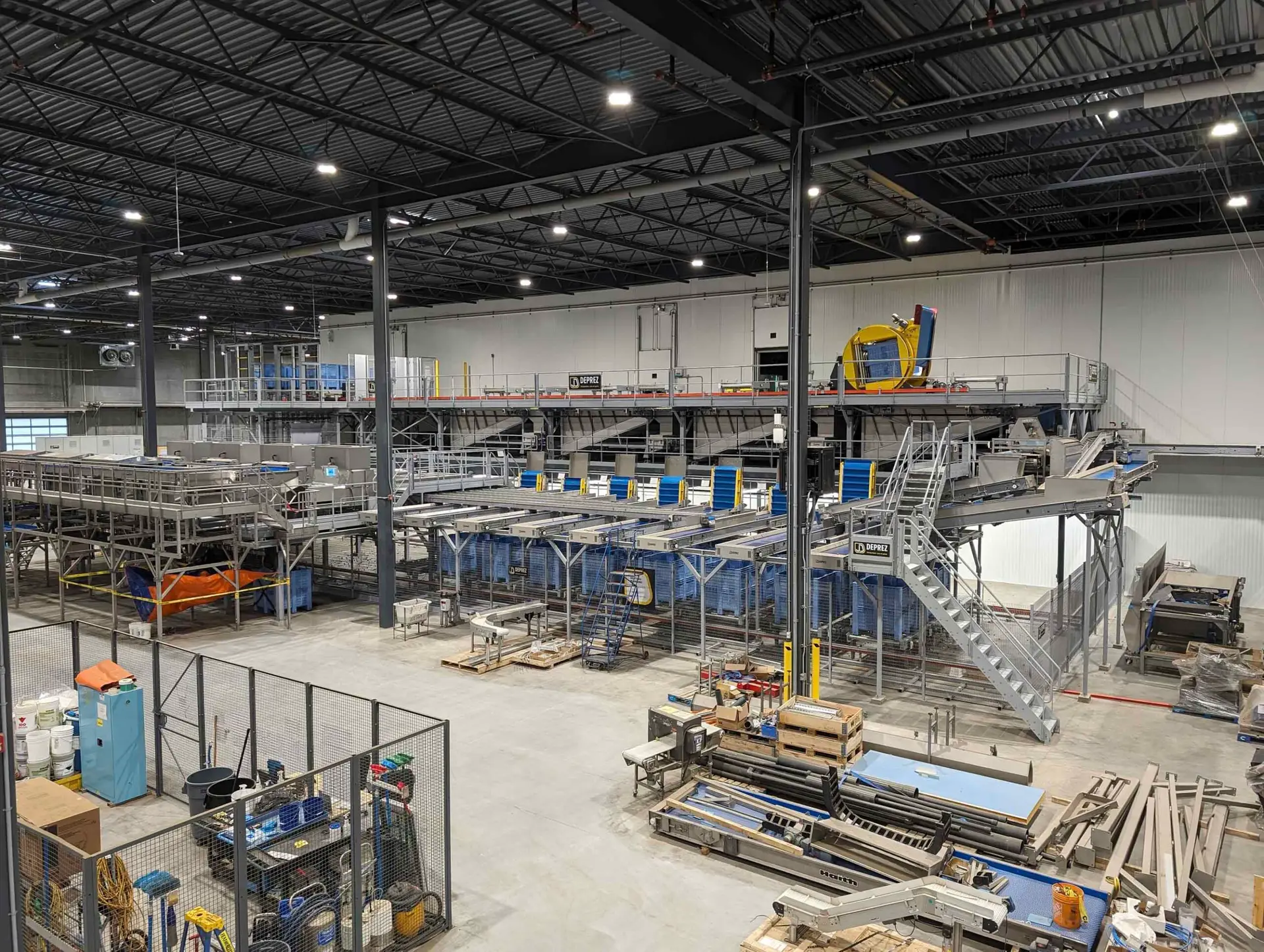
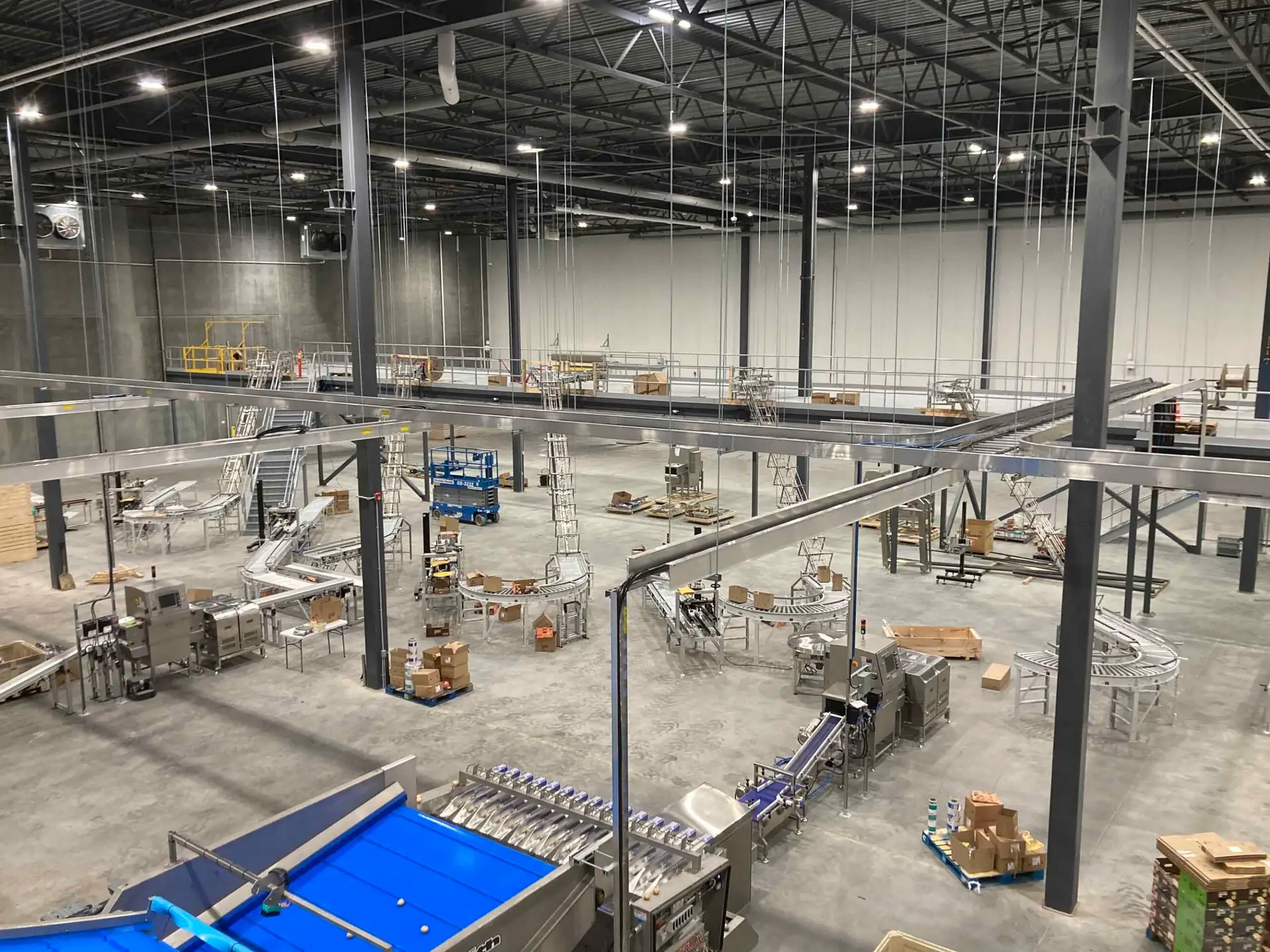
Little Potato Company (LPC) outgrew its existing production site. The buildings had become too small, and the installation offered insufficient opportunities for further growth, flexibility, and quality improvement. That’s why LPC opted for a completely new greenfield site in Edmonton, Canada. From the start, Deprez was involved to help think through the optimal goods flow.
Together with the various stakeholders, the team sought a layout with minimal drop heights and as few elevating conveyors as possible. The installation was designed first, after which the building was built around this optimal configuration. Thanks to this greenfield approach, the entire installation could also be thoroughly tested and optimized before production was transferred from the old site.
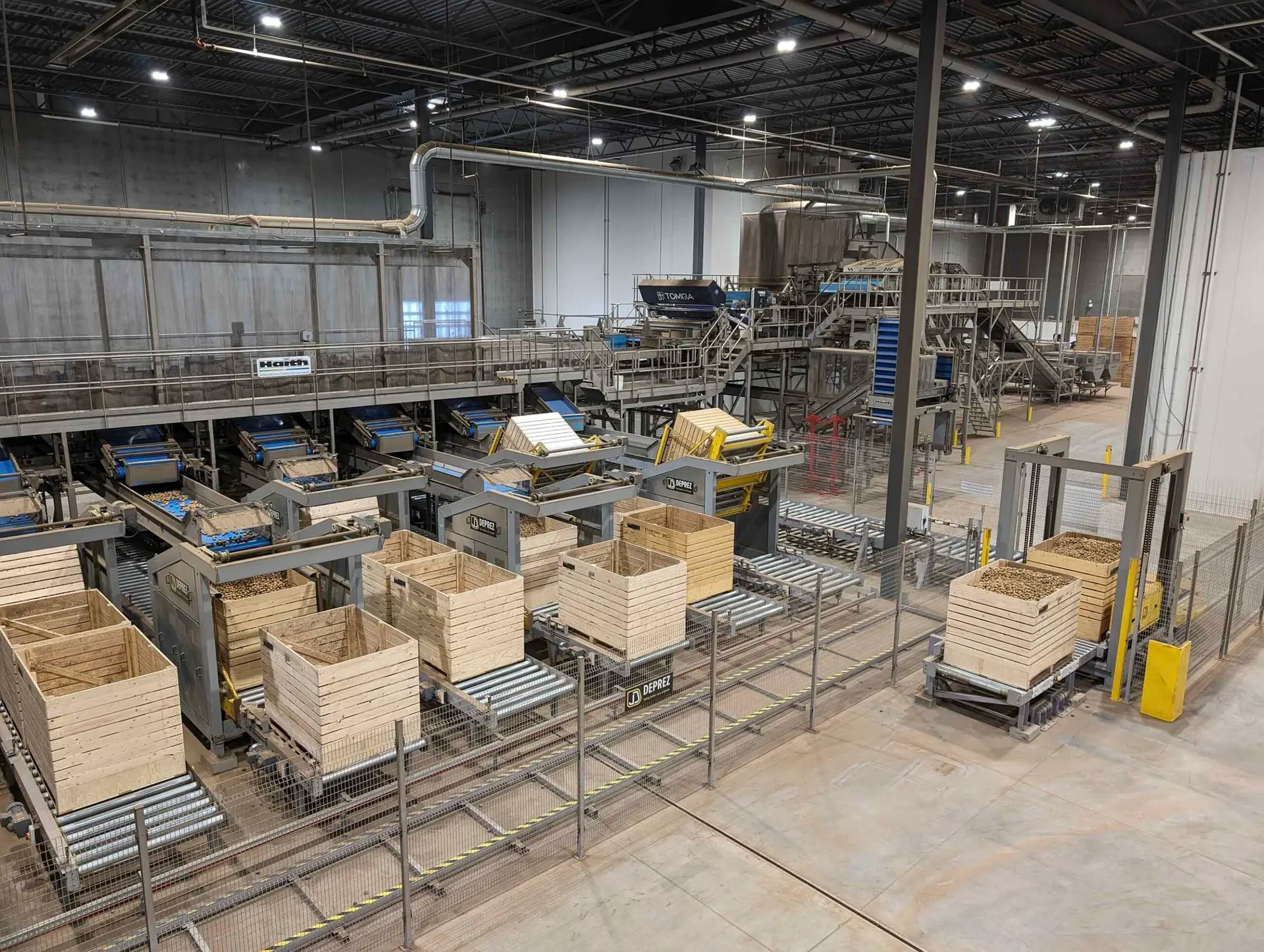
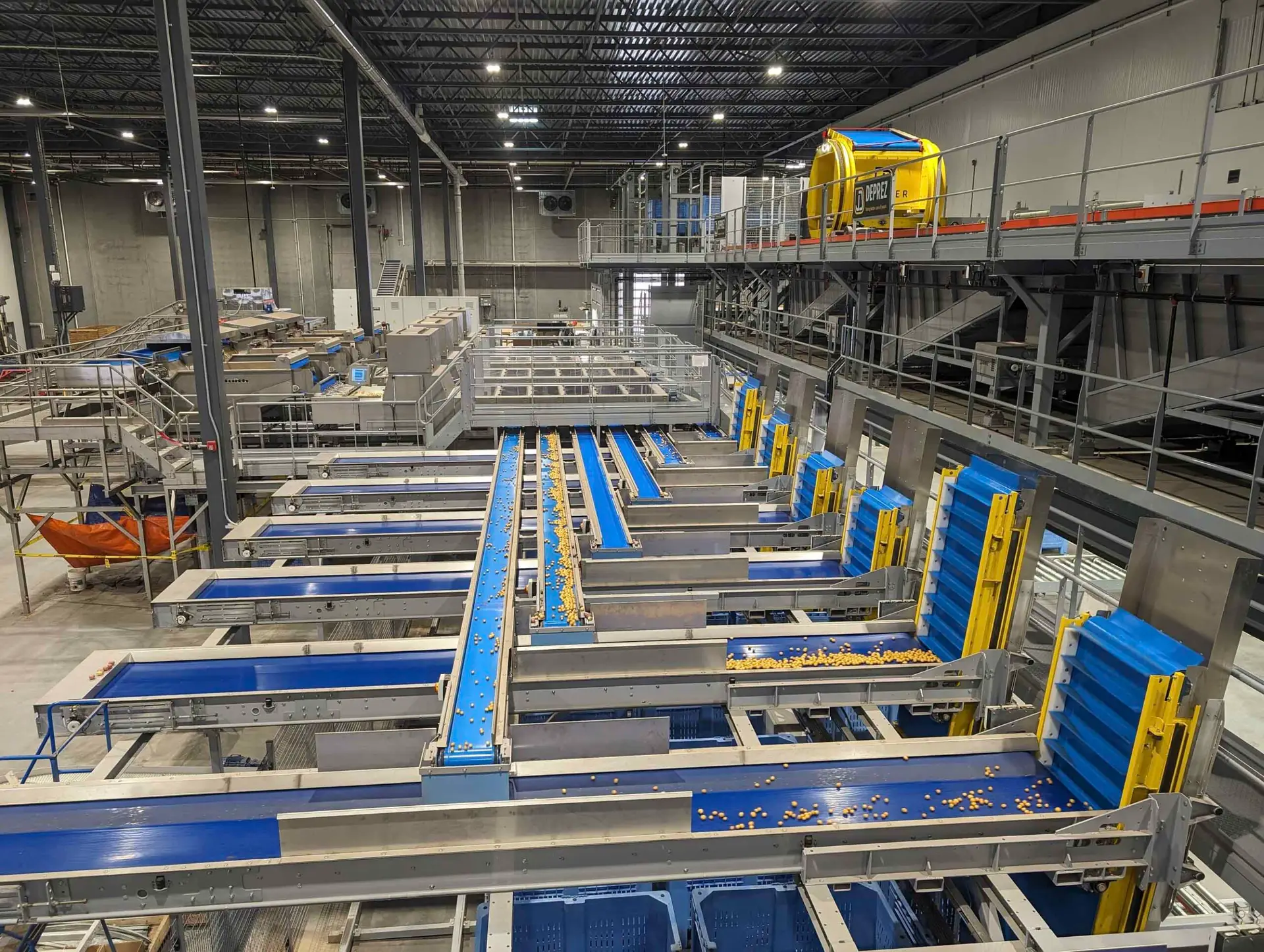
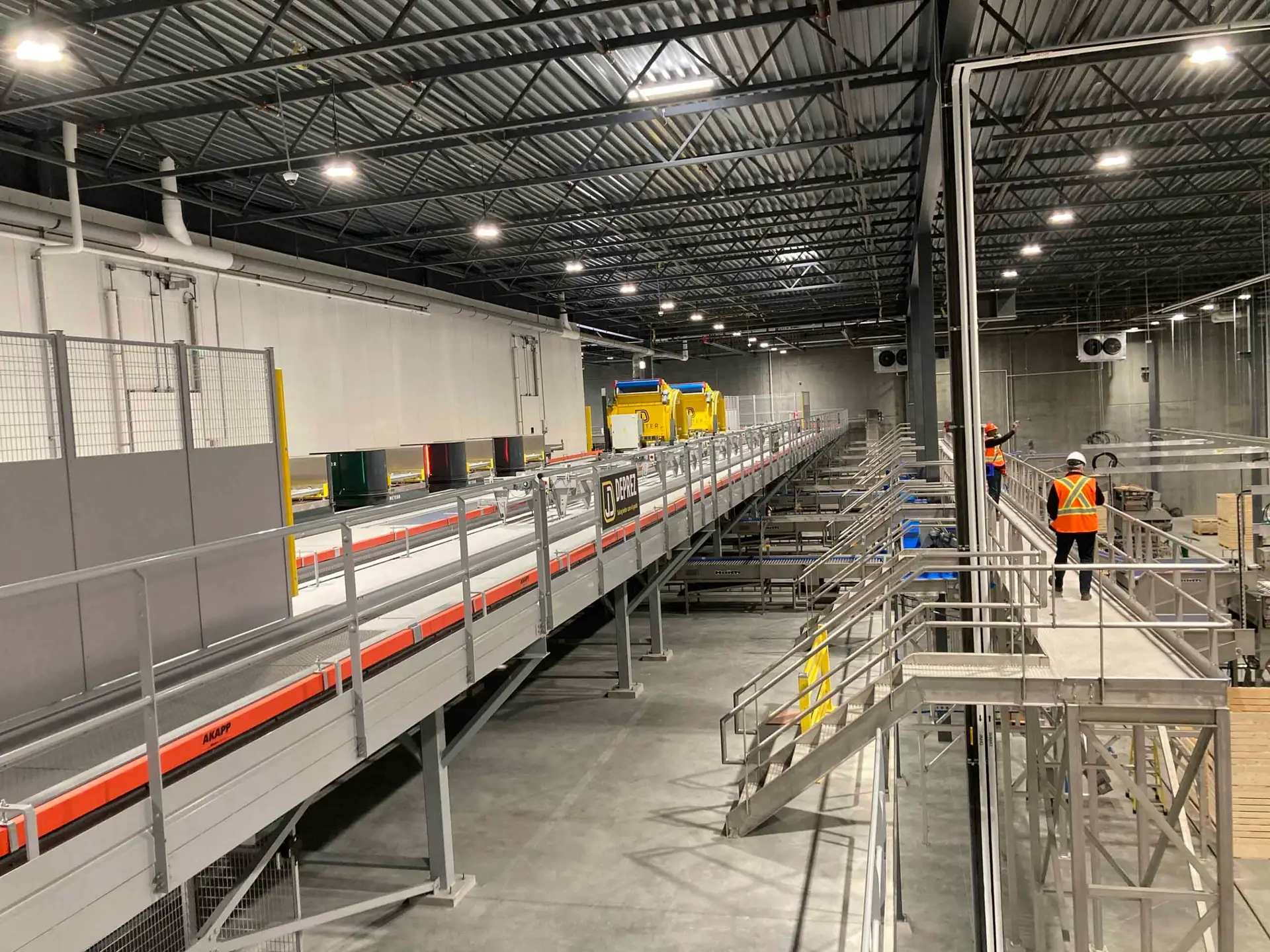
The result is an integrated goods flow from receiving to packing. After receiving, declodding, and optical sorting, the potatoes are automatically sorted to size and filled into wooden bins. These are weighed and stored in the Raw Materials Cooler, with full track & trace per lot and position. Further along in the process, lifts, shuttles, and mobile bin tippers ensure controlled product handling. After the washing line, the potatoes are optically sorted again and automatically filled into plastic bins, which are then stored in the automated warehouse. On demand, Meteor systems bring the correct bins to the packing lines, and empty bins automatically return to the sorting and filling area.
The implementation itself also called for a strong international project approach. About 72 containers of material were shipped from Belgium to Canada, fully in line with the assembly schedule. This resulted in a completely new production facility in which automation, product quality, storage, and traceability work together as one integrated process.