
Besides pure capacity, there was also an organizational challenge on the table. Until then, the supply of empty bins and the removal of filled bins was handled by forklifts up to the outdated bin fillers. La Ferme des Arches wanted to eventually automate this step using AGVs, without having to completely redesign the system once the transition took place. The new line therefore had to be prepared from the design stage for both manual operation and a later automatic control system.
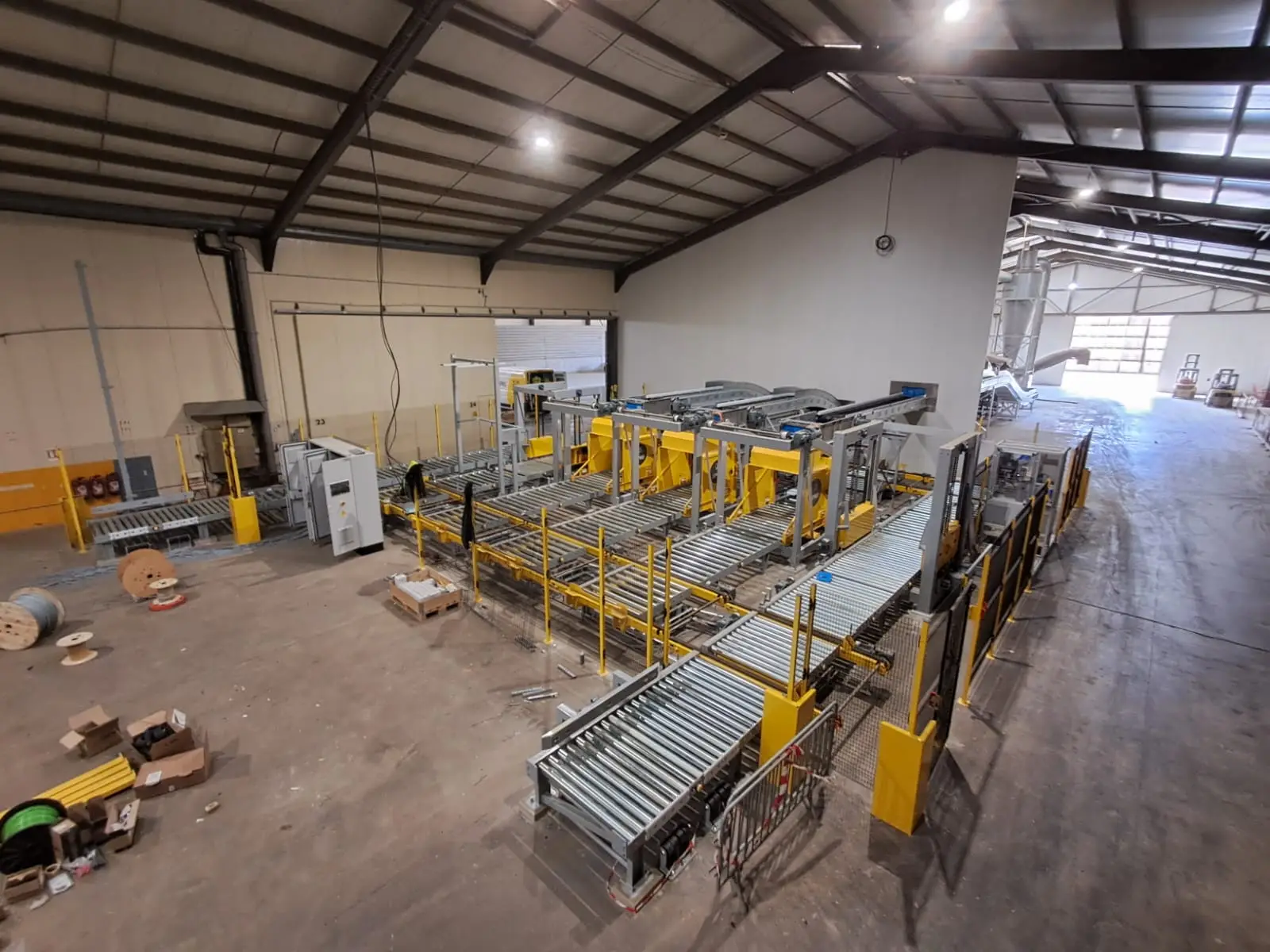
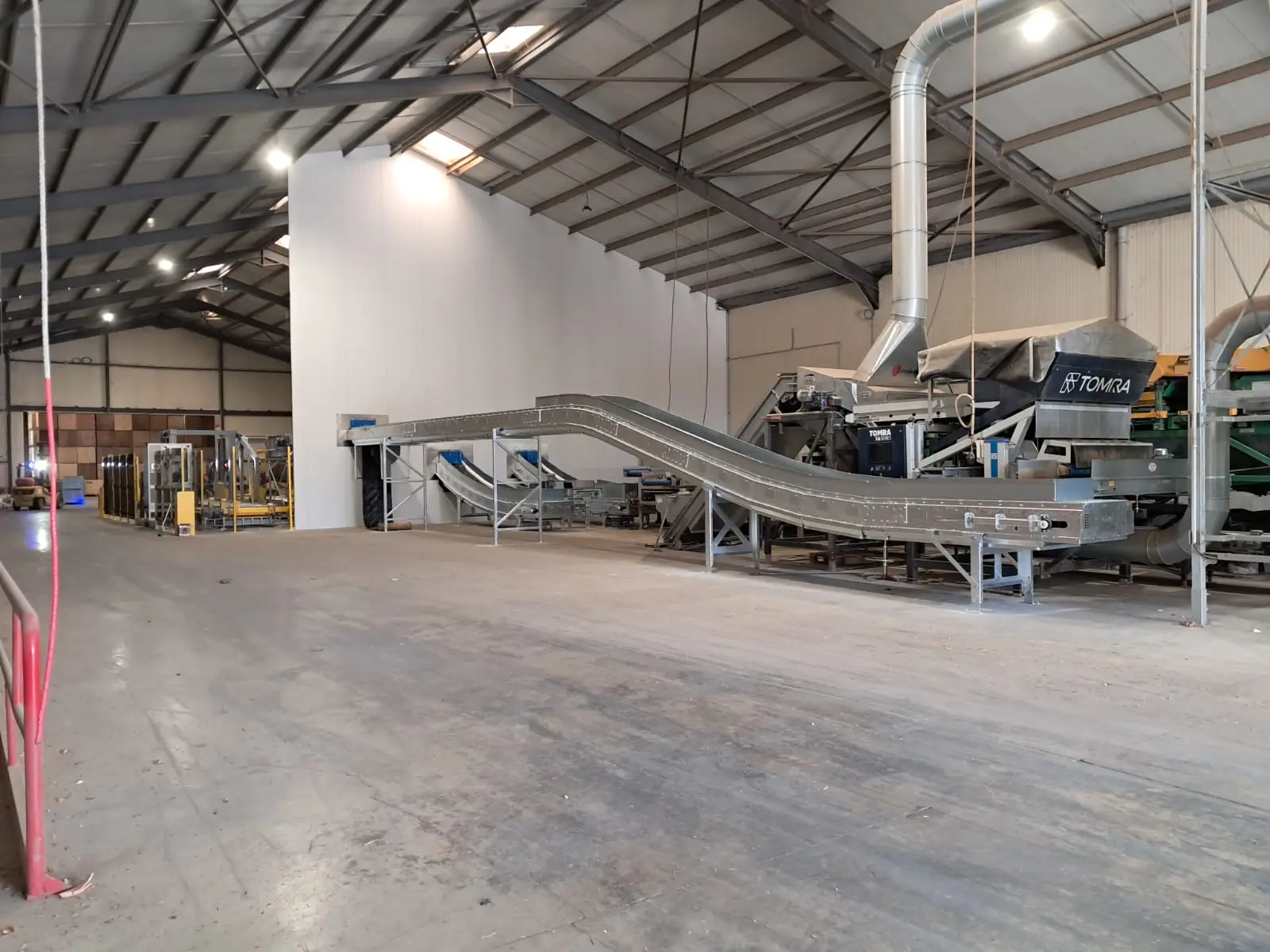
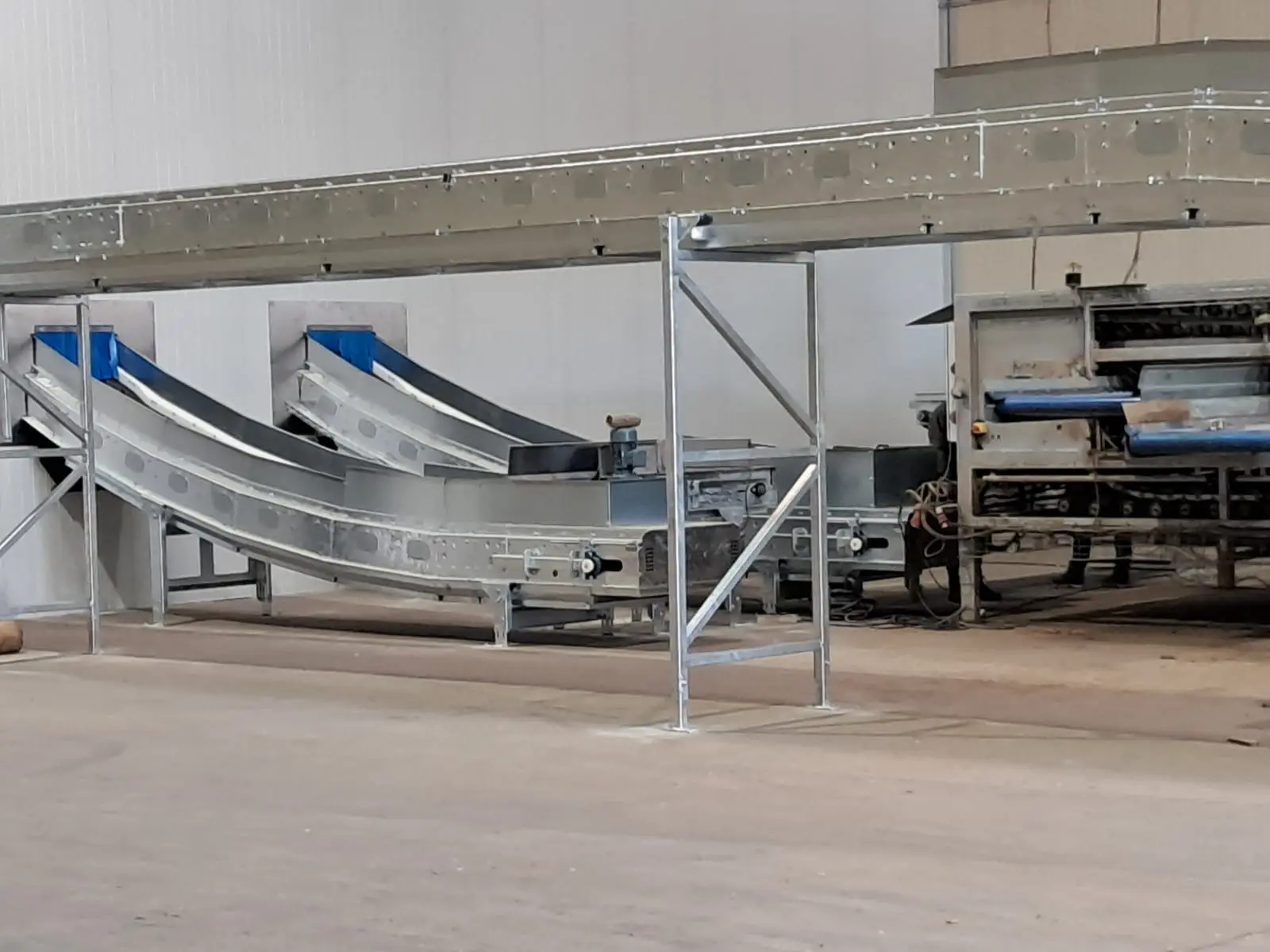
Deprez designed a line that brings together receiving, sorting, and the filling zone in two connected halls. The onions arrive via a hopper, delivered by tractor and trailer, and from there move to the receiving and sorting zone in the first part of the hall. This zone was designed to connect directly, via a belt conveyor, to the filling zone, the bin handling area, in the second part of the hall, separated by a partition wall.
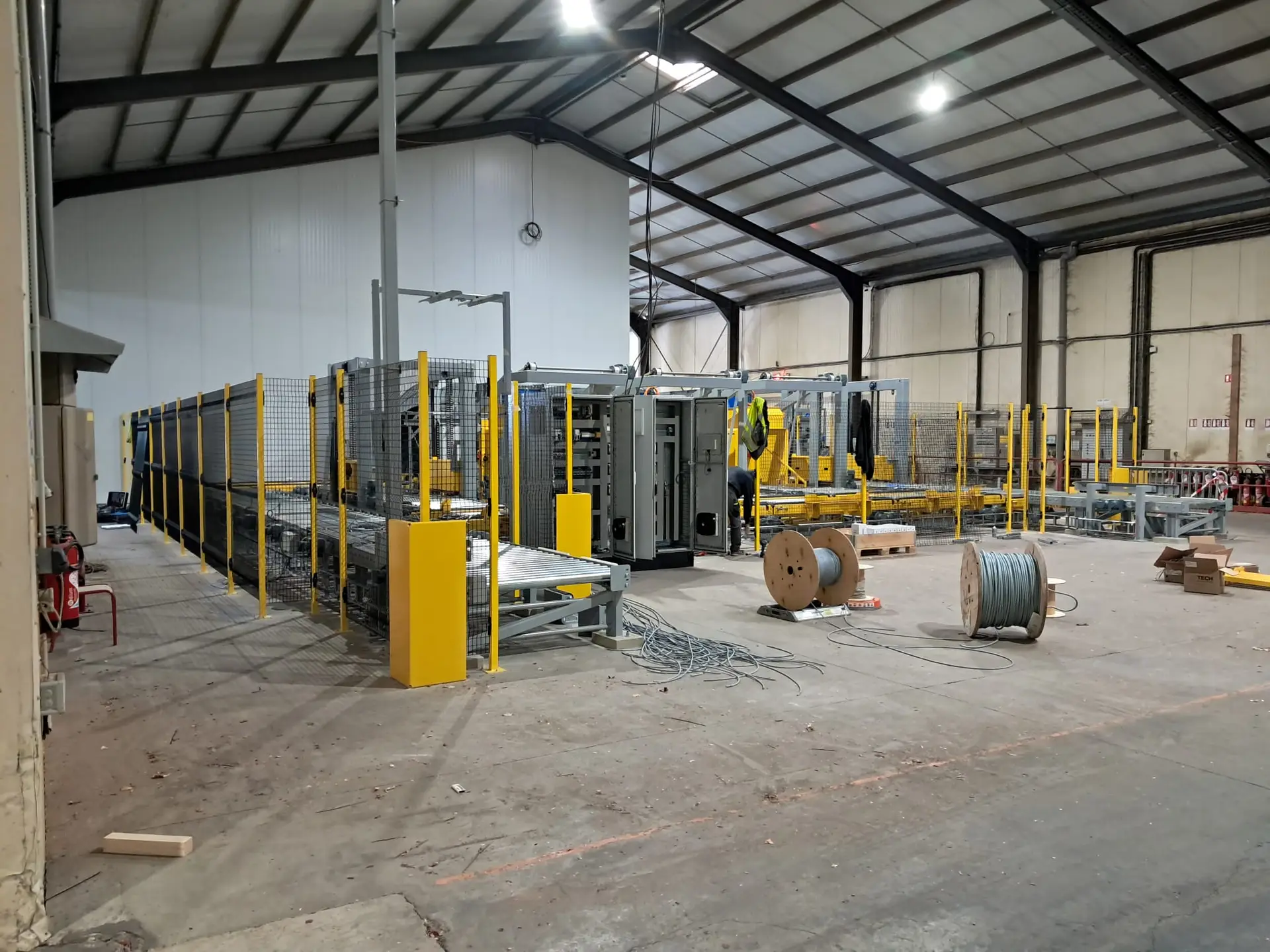
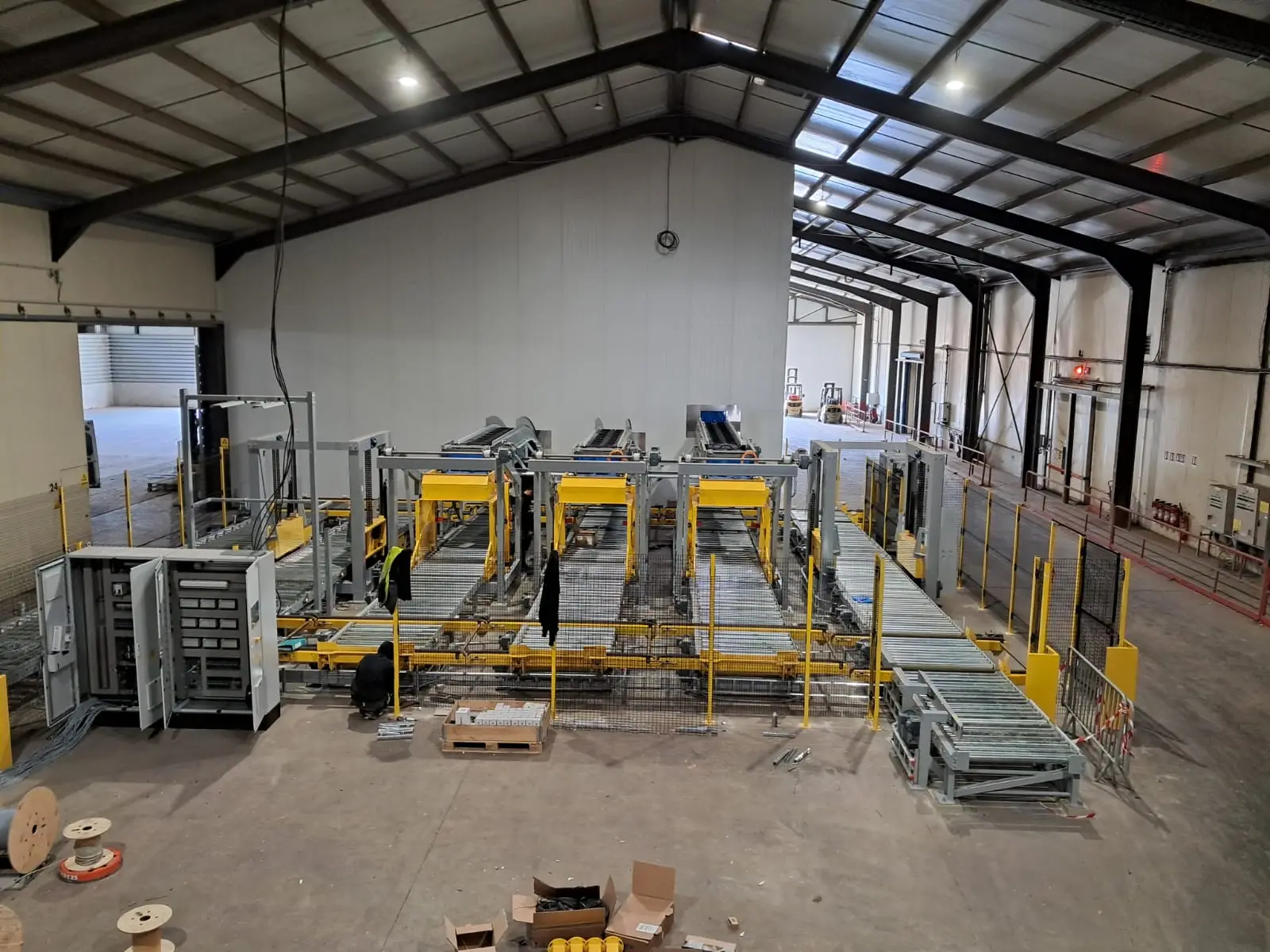
To meet the requirement of three size grades across three fillers, the sorting zone was designed so that the product is fed to each filler at the correct rate and in the correct quantity. For the bins themselves, the filling zone was designed to handle both the destacking of empty bins and the stacking of filled bins, followed by automatic labeling so that each filled bin is digitally and physically identified as it leaves the line.
In the filling zone, empty bins are destacked and staged, filled to the correct size grade via one of the three fillers, and then restacked. Each filled bin automatically receives an adhesive label, ensuring identification and digital tracking of the filling data. The process ends with the bin being picked up or removed, which can be done either manually by forklift or, at a later stage, automatically by an AGV.
The result is a receiving and filling line that delivers the required flexibility and capacity during harvest, with an architecture that already works with manual operation today and can switch to automatic AGV control tomorrow without any modifications.