

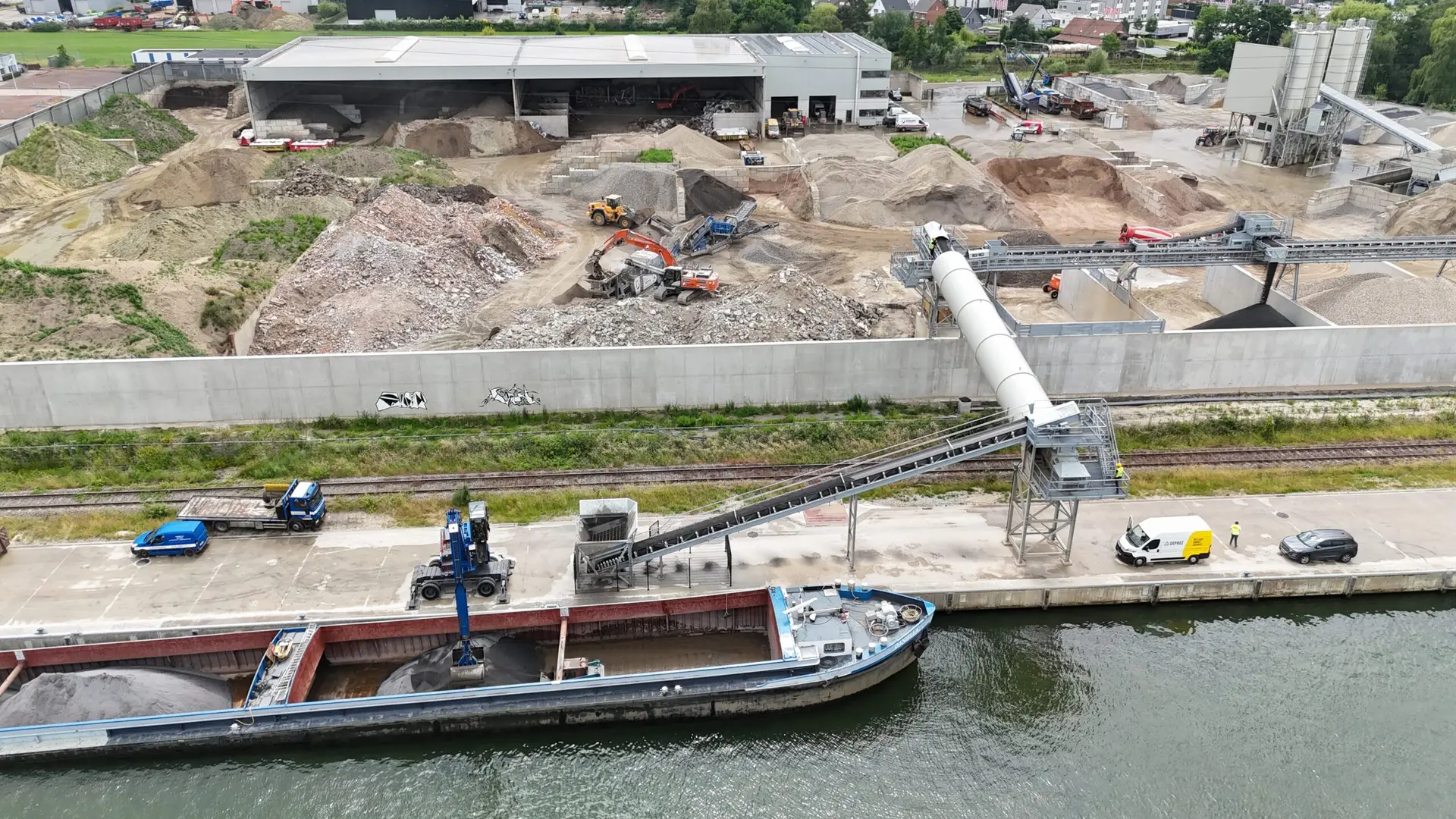
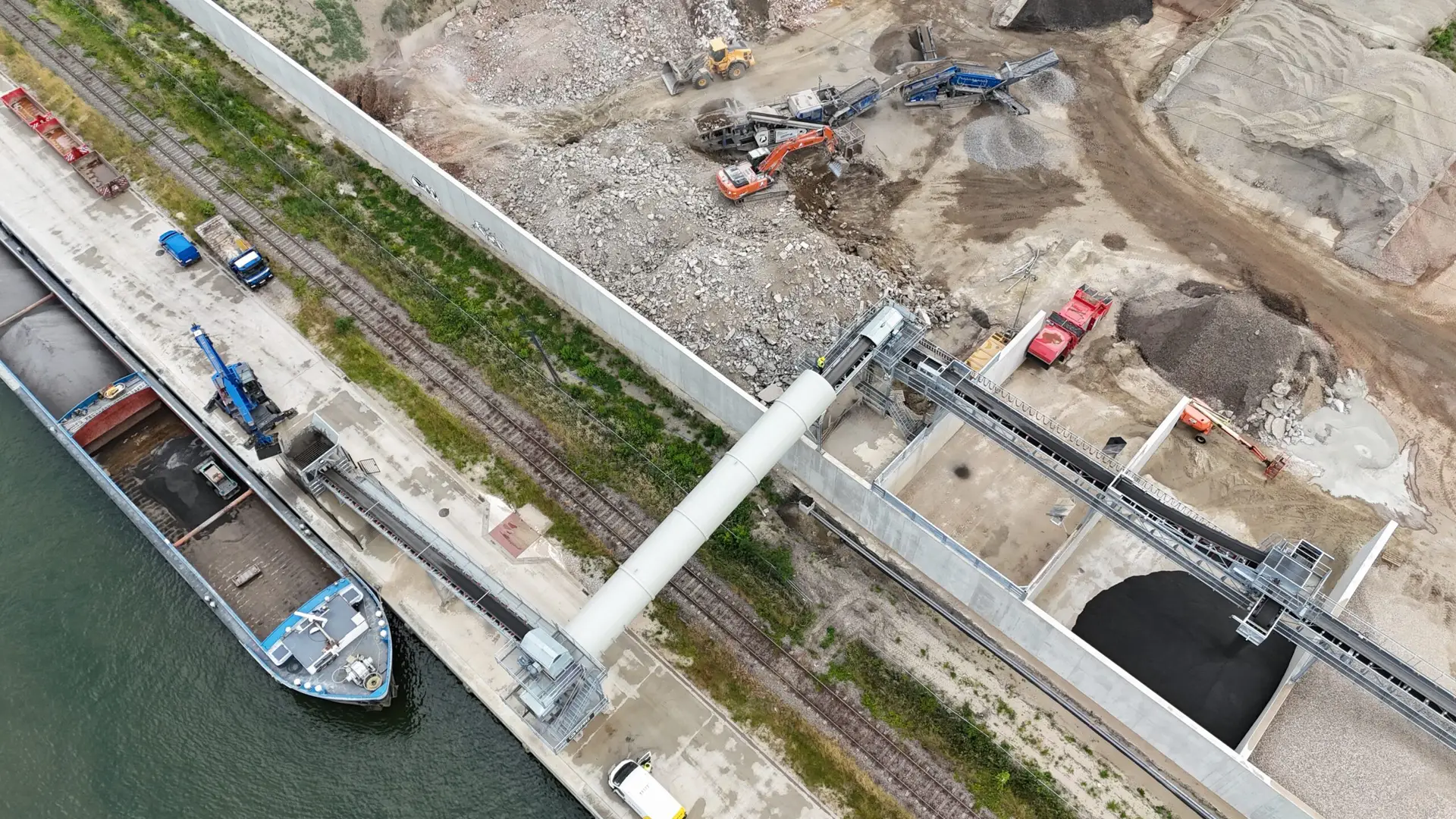
The site conditions presented specific operational challenges. Located along a public canal-side bicycle path, the facility required uninterrupted bicycle traffic at all times. Specific security measures were also required to prevent climbing access to the structure.
Because the facility had to remain fully operational throughout construction, assembly was scheduled within a minimal footprint and executed by a compact two-man mechanical team to limit operational impact. The core of the engineering solution lay in conveying the aggregates through an enclosed tubular bridge across the railway, replacing secondary on-site truck haulage. As Deprez’s first installation crossing an active railway track, the project required strict attention to the structural design and static weight of the tube structure itself.
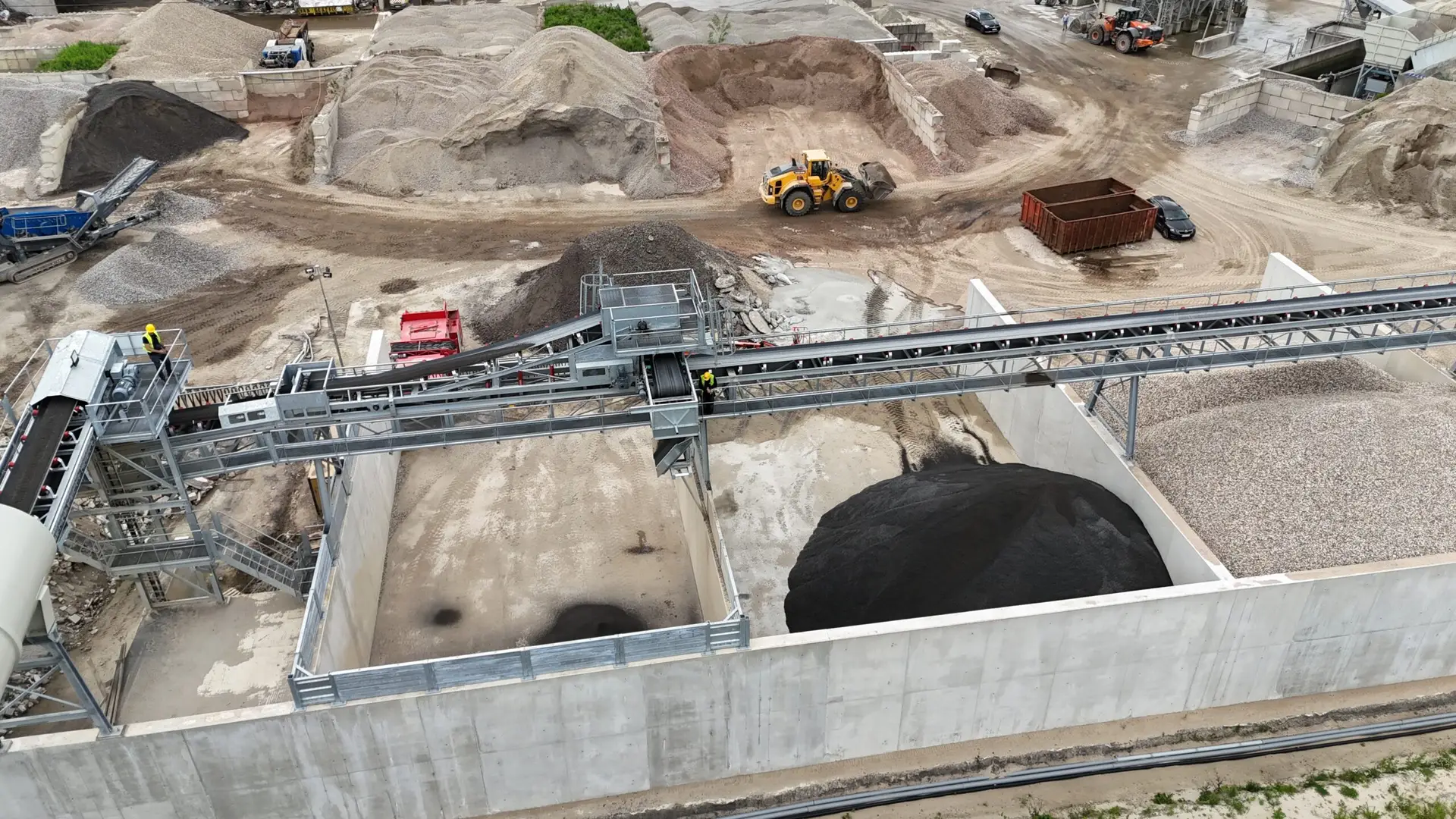
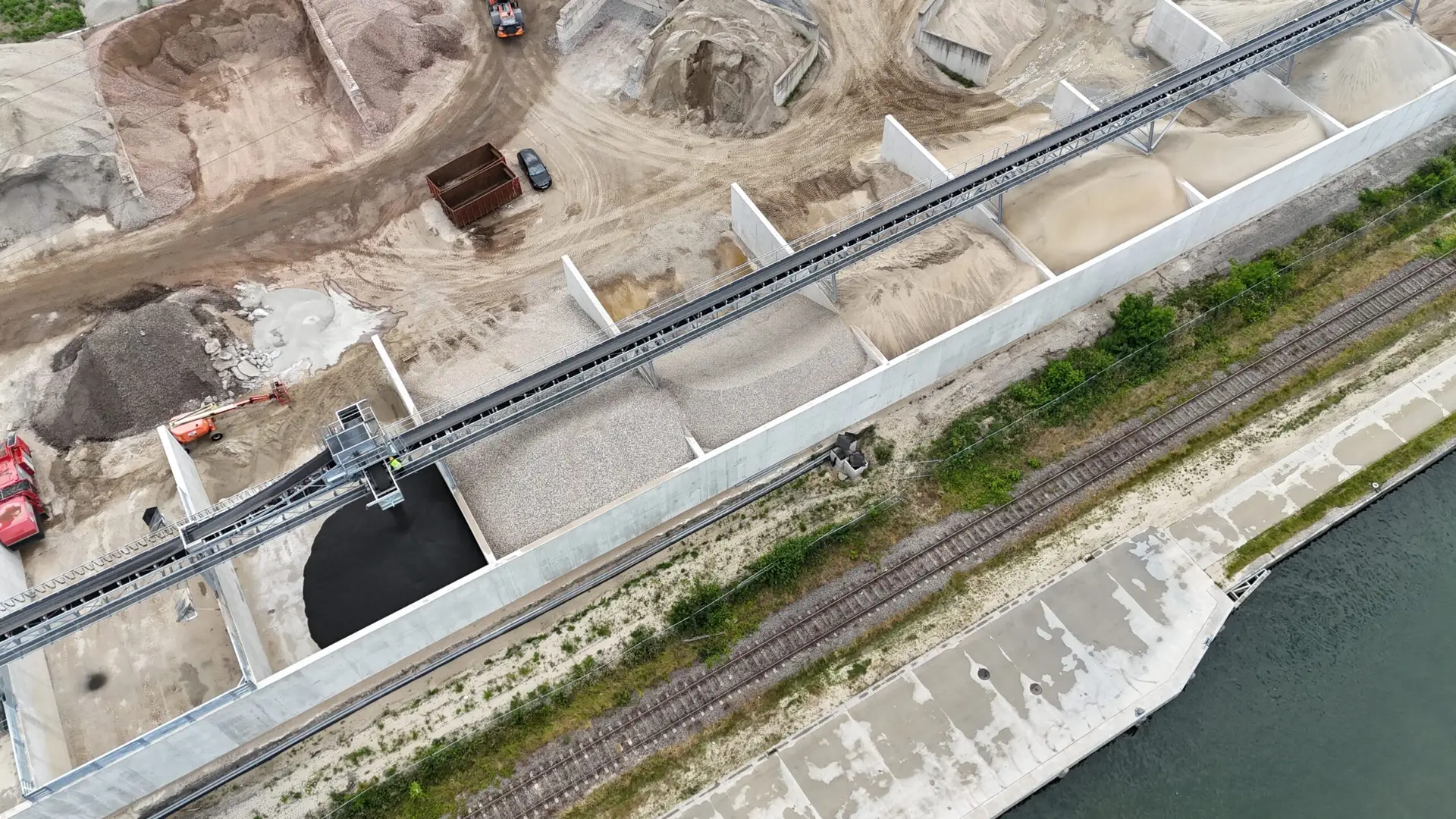
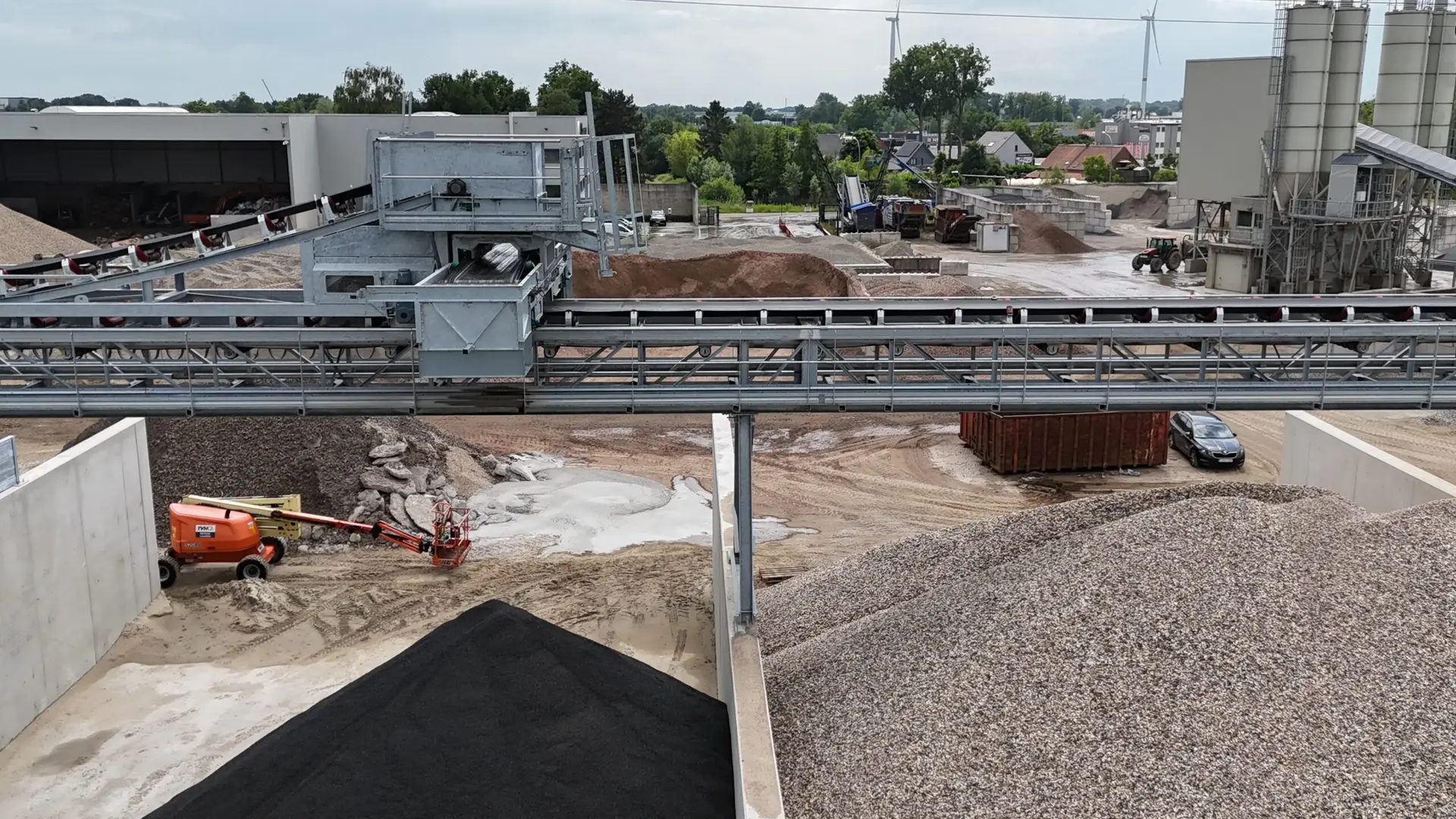
The system along the Albert Canal consists of a transshipment crane rated for up to 600 tons per hour, linked to three 140-meter belt conveyors equipped with tripper cars. Material is distributed across 10 storage bays with 5-meter-high retaining walls, each holding 2,000 to 2,500 m³ of sand or gravel. An enclosed tubular bridge measuring 24 meters long and 3 meters in diameter houses a belt conveyor that transfers all aggregate safely over the quay, bicycle path, and railway tracks in a fully secure structure. A mobile shuttle car travels along the conveyor to fill the bays in a controlled manner.
The installation includes an integrated traffic light system that interfaces with the crane via remote control, ensuring unloading occurs only when the handling line is fully operational and cleared.
To maintain ongoing plant operations during installation, on-site assembly time was engineered to an absolute minimum. As Deprez’s first railway-crossing project, it required meticulous structural preparation and precise logistical planning. This approach enabled the complete structural assembly to be executed safely and successfully in just four hours, with minimal operational disruption.